
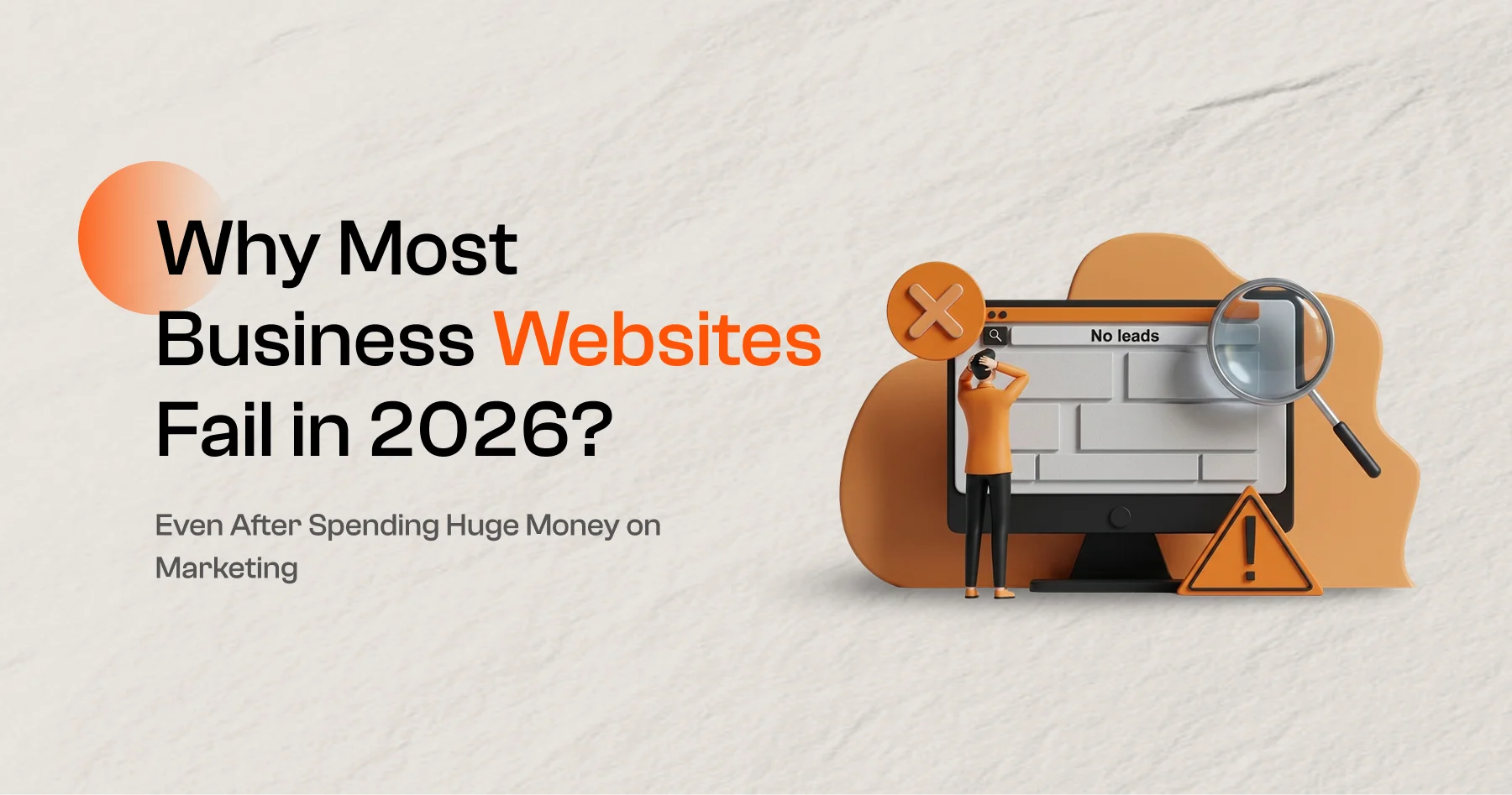
In today’s digital world, almost every business has a website. Whether it is a startup, local business, service provider, eCommerce store, or large company, having an online presence has become essential. Businesses spend thousands — sometimes even lakhs — on website development, branding, SEO, advertisements, and social media marketing expecting that these investments will automatically generate customers.
But the reality is often disappointing.
Many businesses launch beautifully designed websites with high expectations, only to realize months later that the website is not generating inquiries, leads, or sales consistently. The traffic may come occasionally, social media posts may receive some engagement, and advertisements may generate clicks, but conversions remain low.
This creates frustration for business owners because they begin questioning whether digital marketing actually works or whether their investment was wasted.
The truth is, most websites fail not because businesses are not spending money, but because they are focusing on the wrong things. A successful website is not simply about attractive design or trendy animations. It is about understanding how customers think, what users expect, and how trust is built online.
In 2026, websites that perform well are the ones designed around psychology, clarity, authority, and user experience — not just appearance.
The Biggest Problem: Businesses Build Websites for Themselves Instead of Customers
One of the most common mistakes businesses make is creating websites based on their personal preferences instead of customer expectations.
Many business owners focus heavily on:
- modern-looking banners,
- animated sections,
- complicated layouts,
- flashy effects,
- and design trends.
While these elements may look visually impressive, customers usually care about something much simpler.
When visitors land on a website, they subconsciously ask a few important questions within seconds:
- What exactly does this business do?
- Can this business solve my problem?
- Why should I trust them?
- Are they experienced?
- What makes them different from competitors?
If the website fails to answer these questions clearly and quickly, visitors lose interest and leave.
This is why some simple-looking websites generate more leads than visually stunning websites. Simplicity often improves clarity, and clarity improves trust.
Modern users do not want to “figure out” a website. They want immediate understanding and confidence.
Beautiful Design Alone No Longer Creates Trust
A few years ago, simply having a professional-looking website could impress customers. Today, the internet is filled with polished websites, modern templates, and AI-generated designs. Because of this, customers have become more skeptical.
People now understand that anyone can create a beautiful website.
What customers actually look for is proof of credibility.
This is why trust-building elements are becoming more important than design itself. Visitors are more likely to trust businesses that provide:
- genuine testimonials,
- real client results,
- case studies,
- educational content,
- founder visibility,
- transparent communication,
- and industry expertise.
For example, a website explaining real customer challenges and offering practical insights often builds stronger trust than a website filled only with promotional slogans.
Customers are no longer impressed by exaggerated marketing claims. They are looking for businesses that feel genuine, knowledgeable, and trustworthy.
Why Traffic Alone Does Not Guarantee Sales
Many businesses become excited when they see traffic increasing on Google Analytics. They assume higher traffic automatically means business growth.
But traffic without conversions means very little.
A website receiving 50 highly targeted visitors who genuinely need the service can outperform a website receiving 10,000 random visitors with no purchase intent.
This is one of the biggest misunderstandings in digital marketing today.
The quality of traffic matters far more than the quantity of traffic.
Businesses often spend heavily on paid advertisements before fixing the actual website experience. As a result:
- visitors click ads,
- land on the website,
- become confused,
- and leave within seconds.
This increases advertising costs while reducing profitability.
Before driving more traffic, businesses should first ask:
“Is the website actually convincing visitors to trust us?”
Without strong messaging and user experience, even expensive marketing campaigns may fail to generate meaningful results.
Modern Customers Research Before Making Decisions
Customer behavior has changed dramatically over the last few years.
Today’s users rarely make quick decisions immediately after visiting a website. Instead, they research extensively before contacting a business or making a purchase.
Customers now compare:
- multiple competitors,
- customer reviews,
- pricing structures,
- expertise levels,
- social media presence,
- educational content,
- and overall brand authority.
This means businesses can no longer rely only on direct selling.
Modern digital marketing is increasingly becoming education-driven rather than purely sales-driven.
Businesses that provide valuable insights and answer customer questions naturally build more authority and trust.
For example, when a company publishes detailed blogs explaining industry problems, solutions, trends, and practical guidance, users begin viewing that business as knowledgeable and credible.
Educational content reduces customer hesitation because it demonstrates expertise without aggressively pushing sales.

Generic AI Content Is Creating a New Problem
Artificial intelligence tools have made content creation faster than ever before. Businesses can now generate blogs, captions, product descriptions, and advertisements within minutes.
But this has also created a major issue.
The internet is now flooded with repetitive, generic content that sounds almost identical across websites.
As users consume more AI-generated information, they increasingly value originality and authenticity.
People are naturally drawn toward:
- real experiences,
- practical insights,
- unique opinions,
- human storytelling,
- and expert-driven content.
This is why many generic blogs fail to engage readers even if they are technically optimized for SEO.
Content that simply repeats basic information without adding value rarely creates trust or emotional connection.
In the future, businesses that combine AI efficiency with genuine human expertise will have a major advantage.
Search Engines Are Becoming Smarter About Content Quality
Google and AI-powered search systems are evolving rapidly.
Search engines no longer rank content based only on keywords or backlinks. They increasingly analyze:
- content depth,
- user satisfaction,
- expertise signals,
- trustworthiness,
- engagement patterns,
- and topical authority.
This means websites cannot depend on outdated SEO tricks anymore.
Modern SEO focuses heavily on:
- solving real problems,
- satisfying user intent,
- building authority,
- and improving user experience.
For example, someone searching:
“best SEO strategy for startups”
does not simply want keyword repetition.
They likely want:
- practical guidance,
- realistic expectations,
- affordable strategies,
- and actionable insights.
Search engines now try to understand these deeper expectations.
Businesses that truly understand customer psychology often create better-performing content naturally.
Why User Experience Impacts Conversions More Than Businesses Realize
User experience has become one of the most important factors in digital success.
Customers expect websites to:
- load quickly,
- work smoothly on mobile devices,
- provide easy navigation,
- and feel effortless to use.
Even small frustrations can reduce conversions significantly.
For example:
- slow-loading pages create impatience,
- cluttered layouts create confusion,
- excessive popups create irritation,
- poor mobile optimization creates distrust.
A website may have excellent products or services, but poor usability can still drive customers away.
Modern users associate website quality with business quality.
If the website feels outdated or difficult to use, customers may subconsciously assume the business itself is unprofessional.
Businesses Are Now Competing for Trust, Not Just Attention
The internet has become extremely crowded.
Customers see advertisements, social media posts, videos, emails, and promotional messages constantly throughout the day. As a result, attention alone is no longer enough.
The real competitive advantage today is trust.
Businesses that consistently demonstrate:
- expertise,
- transparency,
- helpfulness,
- and authenticity
build stronger long-term customer relationships.
Trust compounds over time.
When users trust a business:
- they spend more time engaging,
- recommend the brand to others,
- convert more easily,
- and return repeatedly.
This is why branding, authority, and reputation are becoming deeply connected to SEO and digital marketing success.
The Future Belongs to Businesses That Educate
One of the most interesting shifts happening in digital marketing is the rise of educational branding.
The businesses growing fastest online are often not the ones aggressively selling all the time.
Instead, they focus on:
- teaching,
- solving problems,
- sharing insights,
- and helping users make informed decisions.
This creates authority naturally.
Customers trust businesses that help them understand their problems better.
In many cases, educational content becomes more powerful than direct advertising because it creates emotional confidence instead of pressure.
Over time, this trust-driven approach often produces stronger and more sustainable business growth.
Final Thoughts
Most websites fail to generate leads not because businesses are not investing money, but because they misunderstand what modern customers actually expect online.
Beautiful design alone is no longer enough.
Traffic alone is no longer enough.
Generic content alone is no longer enough.
Today’s digital landscape rewards businesses that focus on:
- trust,
- clarity,
- expertise,
- authenticity,
- education,
- and user experience.
The internet is becoming more intelligent every year. Search engines are evolving, AI is changing user behavior, and customers are becoming more selective about who they trust.
Businesses that adapt to these changes early will build stronger long-term visibility and customer loyalty.
A successful website is no longer just an online brochure.
It is a digital trust-building system that guides visitors from curiosity to confidence — and ultimately into loyal customers.