
You invested in a professional website.
You’ve spent money on branding, content, photography, or even digital marketing.
People are visiting your website every week.
Yet the enquiries aren’t coming.
If this sounds familiar, you’re not alone.
One of the biggest misconceptions among business owners is believing that simply having a website will automatically generate leads. In reality, a website is only effective when it’s designed to guide visitors toward taking action.
Many websites do a great job of presenting information but struggle to answer one important question:
“Why should a visitor contact your business today instead of leaving and choosing someone else?”
That question sits at the heart of lead generation.
A website doesn’t need thousands of daily visitors to grow your business. In many cases, improving how your existing visitors interact with your website can have a much greater impact than spending more money to attract additional traffic.
Think of it this way.
Imagine owning a retail store where hundreds of people walk in every day but very few make a purchase.
Would your first solution be to bring in even more visitors?
Probably not.
You would first try to understand why existing visitors aren’t buying.
The same principle applies to your website.
Before increasing your marketing budget or investing in more advertising, it’s worth understanding whether your website is helping visitors become customers—or quietly encouraging them to leave.
In this guide, we’ll explore the most common reasons business websites fail to generate enquiries and provide practical solutions you can apply to improve conversions.
Whether you’re a local business, a manufacturing company, a healthcare provider, a retailer, an educational institution, or a growing startup, these strategies will help you create a website that works as a genuine business asset rather than just an online brochure.
Why Most Business Websites Fail to Generate Leads
When business owners think about improving their website, the conversation often starts with design.
Should we use different colours?
Do we need better images?
Should we redesign the homepage?
While design certainly matters, it’s rarely the main reason a website fails to generate leads.
In most cases, the problem lies elsewhere.
Visitors arrive on the website but quickly become confused.
They can’t immediately understand what the business offers.
They struggle to find important information.
They don’t see enough evidence to trust the company.
Or they simply aren’t given a clear reason to take the next step.
These issues may seem small on their own, but together they create friction throughout the customer journey.
Every unnecessary click, confusing headline, slow-loading page, or complicated enquiry form increases the chances of a visitor leaving without making contact.
That’s why successful websites are designed around customer behaviour rather than business assumptions.
Instead of asking:
“What information do we want to show?”
They ask:
“What information does our customer need before they’re ready to contact us?”
That shift in thinking changes everything.
Businesses that consistently generate enquiries online don’t necessarily have the most expensive websites.
They have websites that remove uncertainty, answer important questions, and make taking the next step feel simple.
Traffic Doesn’t Grow Your Business—Conversions Do

One of the biggest mistakes businesses make is focusing entirely on website traffic.
It’s exciting to see more visitors arriving each month.
But traffic alone doesn’t pay the bills.
Imagine these two businesses:
Business A
- 15,000 monthly visitors
- 30 enquiries
Business B
- 2,000 monthly visitors
- 120 enquiries
Which business has the more effective website?
Most business owners would choose Business B.
That’s because its website converts visitors into enquiries far more efficiently.
This is why increasing conversion rates is often one of the fastest ways to improve business results.
Instead of asking:
“How can we get more visitors?”
Ask:
“How can we help more of our current visitors become customers?”
Improving that single metric can dramatically increase the return on every marketing activity, including SEO, Google Ads, social media marketing, and email campaigns.
In other words, your website should be viewed as the centre of your marketing ecosystem—not just another digital asset.
Sign #1: Visitors Leave Without Understanding What Your Business Does
Imagine visiting a company’s website for the first time.
Within a few seconds you’re asking yourself:
- What exactly does this company do?
- Is this service relevant to me?
- Can they solve my problem?
If those questions aren’t answered immediately, many visitors simply leave.
Unfortunately, this is one of the most common issues found on business websites.
Some homepages focus heavily on creative slogans.
Others display large banners with very little explanation.
Some businesses assume visitors already understand their services.
The reality is very different.
Most visitors arrive with little or no prior knowledge about your business.
Your homepage should quickly communicate three things:
- What your business offers.
- Who your services are designed for.
- Why customers should choose you.
How to Fix It
Replace vague marketing headlines with clear, customer-focused messaging.
Within the first screen of your homepage, visitors should understand:
- What you do.
- How you help.
- What action they should take next.
Simple, direct communication almost always performs better than clever but confusing copy.
Sign #2: Your Website Doesn’t Build Trust
People rarely contact a business they don’t trust.
Before filling out an enquiry form or making a phone call, visitors naturally look for reassurance.
They’re asking themselves questions like:
- Is this company experienced?
- Have they worked with businesses like mine?
- Can I rely on them?
- Are they genuinely credible?
If your website doesn’t answer those questions, hesitation quickly replaces confidence.
Trust isn’t created through bold claims such as “We’re the best.”
It’s created through evidence.
How to Fix It
Strengthen your website with genuine trust signals such as:
- Customer testimonials
- Case studies
- Client logos
- Google Reviews
- Certifications
- Awards
- Team introductions
- Portfolio projects
- Years of experience
These elements help visitors feel more confident before they ever contact your business.
Sign #3: Your Website Doesn’t Give Visitors a Clear Next Step
Many websites provide useful information but stop short of telling visitors what to do next.
Imagine finishing a conversation with a salesperson who simply says,
“Thanks for visiting.”
No invitation.
No recommendation.
No next step.
That’s exactly what happens on many business websites.
After reading a service page or blog article, visitors should never wonder:
“What should I do now?”
How to Fix It
Every important page should include a clear and relevant call-to-action.
Examples include:
- Request a Free Quote
- Book a Consultation
- Schedule a Demo
- Contact Our Team
- Get Started Today
Calls-to-action should feel natural and helpful rather than overly promotional.
The objective is simply to guide visitors toward the next stage of their decision-making journey.
Every Missed Lead Has a Reason
Businesses often assume visitors leave because they weren’t interested.
Sometimes that’s true.
But more often, visitors leave because the website didn’t answer their questions, build enough confidence, or make it easy to take action.
The encouraging news is that these problems are usually fixable.
By understanding how real customers think and removing the obstacles that stand in their way, your website can become far more effective without necessarily attracting more traffic.
In the next section, we’ll explore four more reasons business websites struggle to generate leads, including slow loading speeds, poor mobile experiences, confusing navigation, and ineffective contact forms—issues that quietly reduce conversions every single day.
Reason #4: Your Website Loads Too Slowly
Think about the last time you clicked on a website that took several seconds to load.
Did you patiently wait?
Or did you close the tab and visit another website instead?
Most people choose the second option.
Website speed has become one of the biggest factors influencing user experience. Visitors expect websites to load almost instantly, especially when browsing on mobile devices. If your pages are slow, you’re creating friction before a potential customer even reads a single line of content.
Slow websites don’t just frustrate users—they also reduce conversions and can affect your visibility in search results.
Common reasons for poor website performance include:
- Large, unoptimized images
- Low-quality web hosting
- Too many plugins
- Heavy animations and scripts
- Poorly written code
- Outdated software
Even if your website looks attractive, slow performance can undo all the effort you’ve invested in marketing.
How to Fix It
Improving speed doesn’t always require rebuilding your website.
Start with the fundamentals:
- Compress and optimize images before uploading them.
- Remove unnecessary plugins and scripts.
- Use reliable, high-performance hosting.
- Enable browser caching.
- Minify CSS and JavaScript files.
- Regularly test your website’s performance.
A faster website creates a better experience for visitors and increases the likelihood that they’ll continue exploring your services.
Reason #5: Your Website Doesn’t Work Well on Mobile Devices
Take a moment to visit your own website on your phone.
Not just the homepage.
Browse a few service pages.
Read a blog article.
Open your contact form.
Now ask yourself:
Is everything easy to read?
Are the buttons large enough to tap comfortably?
Does the navigation feel simple?
Can you complete the enquiry form without frustration?
If the experience feels difficult for you, it will be even more frustrating for potential customers.
Today, a significant share of business website traffic comes from smartphones. A poor mobile experience often leads to higher bounce rates, fewer enquiries, and lost sales opportunities.
How to Fix It
A mobile-friendly website should offer the same quality experience regardless of screen size.
Make sure your website:
- Adapts automatically to different devices.
- Uses readable font sizes.
- Has touch-friendly buttons.
- Displays images correctly.
- Loads quickly on mobile networks.
- Makes forms easy to complete.
Responsive design is no longer a premium feature—it’s an essential part of a successful business website.
Reason #6: Your Navigation Makes Visitors Work Too Hard
Every visitor arrives on your website with a purpose.
Some want to learn about your services.
Others want to view your portfolio.
Some are looking for pricing.
Others simply want your phone number.
If finding that information feels like solving a puzzle, many visitors won’t continue searching.
They’ll leave.
Confusing navigation is one of the most overlooked reasons websites fail to generate leads.
Some common navigation mistakes include:
- Too many menu items.
- Unclear page names.
- Multiple dropdown levels.
- Important pages hidden deep within the website.
- Contact details that are difficult to locate.
Good navigation should reduce effort—not increase it.
How to Fix It
Organize your website around how customers think, not how your business is structured internally.
Most business websites only need a straightforward navigation menu that includes pages such as:
- Home
- About
- Services
- Portfolio or Case Studies
- Blog
- Contact
Visitors should be able to reach important information within just a few clicks.
If people have to stop and think about where to go next, your navigation probably needs improvement.
Reason #7: Your Contact Form Is Creating Unnecessary Barriers
Imagine a potential customer is finally ready to contact you.
They click the enquiry form…
…and discover they need to complete fifteen different fields before submitting it.
Many visitors won’t.
Lengthy forms increase effort, and increased effort usually leads to fewer enquiries.
Businesses often ask for information that isn’t actually required during the first interaction.
Details such as:
- Annual revenue
- Company size
- Complete address
- Budget estimates
- Multiple dropdown selections
- Detailed project requirements
…can all wait until after the initial conversation.
The purpose of a contact form isn’t to qualify every lead.
It’s to make starting a conversation as easy as possible.
How to Fix It
Keep your forms simple.
For most businesses, requesting the following information is enough:
- Name
- Email address
- Phone number (if appropriate)
- Message
If additional information is required, collect it during a follow-up call or meeting.
You’ll often see a noticeable improvement in enquiry rates simply by reducing the number of required fields.
Small Obstacles Often Have the Biggest Impact
When businesses think about improving their website, they usually imagine major redesigns or expensive redevelopment projects.
In reality, many conversion problems are caused by relatively small issues.
A page that loads a few seconds too slowly.
A navigation menu that’s slightly confusing.
A contact form that asks for unnecessary information.
A mobile experience that feels frustrating.
Individually, these problems might seem insignificant.
Together, they create enough friction to convince potential customers to leave before making contact.
The good news is that these obstacles are usually straightforward to fix, and even modest improvements can lead to noticeable increases in enquiries.
In the next section, we’ll explore three more reasons your website may be struggling to generate leads, including weak content, the absence of trust signals, and why many business websites fail to support the customer journey after a visitor lands on the site.
Reason #8: Your Content Answers the Wrong Questions
One of the biggest reasons visitors leave a website without making an enquiry is simple.
They don’t find the information they were looking for.
Many business websites spend most of their time talking about themselves.
They explain when the company was founded, describe their mission, and highlight years of experience. While that information has value, it’s rarely the reason someone visits your website.
Potential customers arrive with questions that matter to them.
They’re thinking:
- Can this company solve my problem?
- How does the process work?
- How much will it cost?
- How long will it take?
- Why should I choose this company instead of another?
If your website doesn’t answer these questions, visitors often leave to continue their research elsewhere.
How to Fix It
Write content that addresses your customers’ concerns instead of simply promoting your business.
Your service pages should explain:
- What problems you solve.
- Who your services are designed for.
- What customers can expect.
- How your process works.
- Frequently asked questions.
- The next step after contacting you.
The more questions you answer, the easier it becomes for visitors to trust your business.
Reason #9: Your Website Doesn’t Give Visitors Enough Confidence to Contact You
Most people don’t make a decision the moment they land on a website.
They spend time evaluating whether the business feels trustworthy.
Think about your own buying behaviour.
Before contacting a company, you probably look for signs that reassure you.
Have they worked with businesses like mine?
Do they have positive customer reviews?
Can I see examples of their work?
Do they appear established and professional?
If visitors can’t find that reassurance, uncertainty begins to replace confidence.
And uncertainty rarely leads to enquiries.
How to Fix It
Trust isn’t built through marketing claims.
It’s built through evidence.
Strengthen your website with genuine proof that demonstrates your experience and credibility.
Examples include:
- Client testimonials
- Google Reviews
- Case studies
- Portfolio projects
- Before-and-after results
- Industry certifications
- Awards and recognitions
- Professional team photographs
- Client success stories
These trust signals should appear naturally throughout your website rather than being hidden on a single page.
The goal is to reassure visitors at every stage of their journey.
Reason #10: Your Website Doesn’t Support the Customer Journey
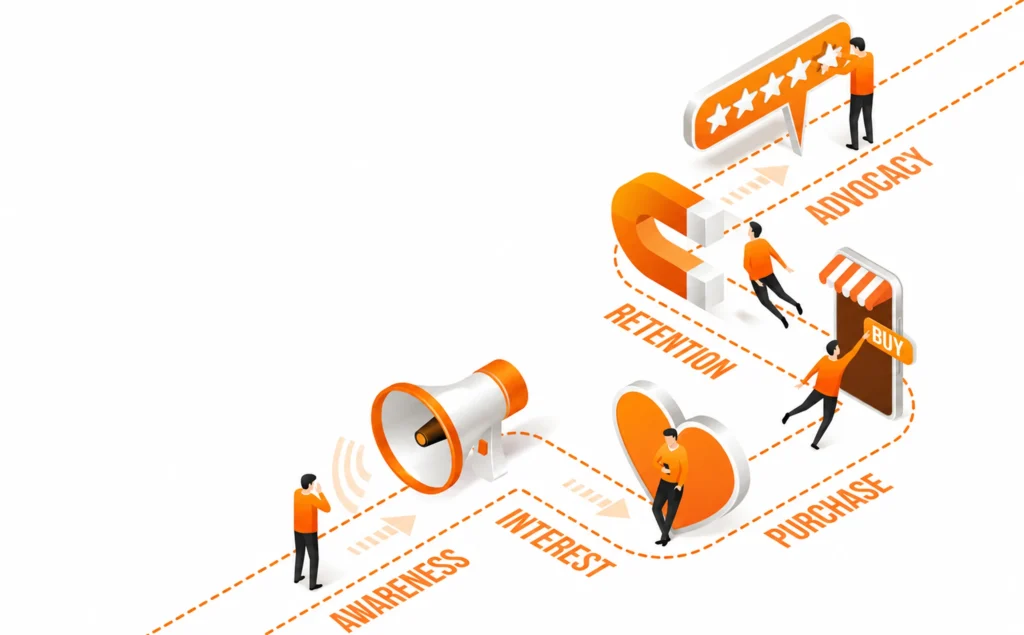
Every visitor who arrives on your website is at a different stage of making a decision.
Some are just beginning to research their options.
Others are comparing different providers.
Some are ready to contact a business today.
Treating every visitor the same is a missed opportunity.
A successful business website supports people throughout their entire decision-making process.
For example:
A first-time visitor might want educational content.
Someone comparing providers may be looking for case studies or pricing information.
A ready-to-buy customer simply wants a quick way to contact your team.
Your website should help each of these visitors move naturally to the next stage.
How to Fix It
Think of your website as a guided journey rather than a collection of individual pages.
Make sure visitors can easily move between related content.
For example:
- Blog articles should link to relevant service pages.
- Service pages should answer common questions.
- Case studies should demonstrate real results.
- Every important page should include a clear next step.
The easier you make the customer journey, the more enquiries your website is likely to generate.
How to Audit Your Website for Lead Generation
If you’re unsure whether your website is helping or hurting your business, start with a simple audit.
Review your website as if you were a potential customer visiting for the first time.
Ask yourself these questions:
Clarity
- Can I immediately understand what the business offers?
- Is the value proposition clear?
- Are services explained in simple language?
User Experience
- Does the website load quickly?
- Is it easy to navigate?
- Does it work well on mobile devices?
Trust
- Are testimonials visible?
- Can I see examples of previous work?
- Does the business appear credible?
Conversion
- Is there a clear call-to-action on every important page?
- Is the contact form easy to complete?
- Are phone numbers and email addresses easy to find?
SEO
- Are page titles and headings properly organized?
- Does the website contain helpful, original content?
- Are pages internally linked?
If you answer “No” to several of these questions, you’ve likely identified areas where your website can be improved.
The good news is that many of these improvements don’t require a complete redesign.
Often, refining your messaging, improving navigation, simplifying forms, strengthening trust signals, and enhancing user experience can significantly increase the number of enquiries your website generates.
Your Website Should Work as Hard as You Do
Your website is one of the few business assets that works around the clock.
It’s available when you’re in meetings.
It’s available after business hours.
It’s available when potential customers are researching solutions from anywhere in the world.
That means every visitor matters.
Every page matters.
Every interaction matters.
When your website clearly communicates your value, answers customer questions, builds trust, and makes it easy to take the next step, it becomes much more than an online presence.
It becomes one of your most effective sales and marketing tools.
In the final section, we’ll share a practical website lead generation checklist, explain when it’s time to redesign your website, answer some of the most frequently asked questions from business owners, and provide actionable recommendations to help your website generate more enquiries consistently.
A Website Lead Generation Checklist
By now, you’ve seen that generating more enquiries isn’t always about spending more on marketing. In many cases, it’s about making your website easier to understand, easier to trust, and easier to use.
Before investing in a redesign or increasing your advertising budget, use this checklist to evaluate your current website.
Website Clarity
✔ Does your homepage clearly explain what your business does?
✔ Can visitors understand your services within a few seconds?
✔ Is your value proposition easy to understand?
✔ Does every service page explain the benefits to the customer instead of simply listing features?
User Experience
✔ Does your website load quickly?
✔ Is it fully responsive on mobile devices?
✔ Is navigation simple and intuitive?
✔ Can visitors find important information without unnecessary clicks?
Trust & Credibility
✔ Do you display customer testimonials?
✔ Have you included Google Reviews or client feedback?
✔ Does your website showcase completed projects or case studies?
✔ Are your contact details easy to find?
✔ Does your website use HTTPS for security?
Conversion Optimization
✔ Does every important page include a clear call-to-action?
✔ Are enquiry forms short and easy to complete?
✔ Are visitors encouraged to contact your business at multiple points throughout the website?
✔ Do your landing pages focus on solving customer problems?
Search Engine Optimization
✔ Are page titles and meta descriptions optimized?
✔ Does your content answer real customer questions?
✔ Are your headings structured properly?
✔ Are related pages linked together through internal links?
✔ Are images optimized for performance?
The more boxes you can confidently tick, the stronger your website’s foundation will be for generating consistent enquiries.
When Should You Redesign Your Website?
Not every website needs a complete redesign.
Sometimes small improvements are enough to achieve better results.
However, there are situations where rebuilding your website becomes the smarter long-term investment.
You should seriously consider redesigning your website if:
- It no longer reflects your brand.
- The design looks outdated.
- It isn’t mobile-friendly.
- Pages load slowly.
- You’re struggling to update content.
- The website generates very few enquiries despite consistent traffic.
- It doesn’t support your current business goals.
- Technical SEO issues are limiting search visibility.
- Customers frequently mention that the website is difficult to use.
A redesign shouldn’t focus only on appearance.
It should improve the entire customer experience—from the moment someone lands on your website until they become a customer.
Turn Your Website Into a Lead Generation Tool
Many businesses view their website as something that simply needs to exist.
The most successful businesses see it differently.
They treat their website as an active part of their sales and marketing process.
Every page has a purpose.
Every piece of content answers a customer question.
Every call-to-action guides visitors toward the next step.
Every improvement is based on understanding how real customers behave.
That approach changes the role of a website completely.
Instead of being a digital brochure, it becomes a tool that works every day to build trust, generate enquiries, and support business growth.
How Chendur Digital Helps Businesses Generate More Leads
At Chendur Digital, we believe a successful website should do more than look professional.
It should help your business attract the right audience, build credibility, and convert visitors into enquiries.
Our approach combines thoughtful design, technical expertise, search engine optimization, and conversion-focused user experience to create websites that support long-term business growth.
Whether you’re launching a new website, improving an existing one, or planning a complete redesign, every decision should be based on one question:
Will this make it easier for potential customers to trust our business and take the next step?
That’s the principle behind every high-performing business website.
Final Thoughts
If your website isn’t generating enough leads, don’t assume the problem is a lack of visitors.
More often than not, the issue lies in what happens after visitors arrive.
A slow website, unclear messaging, weak trust signals, confusing navigation, or poor calls-to-action can quietly reduce conversions without you even realizing it.
The encouraging news is that these problems are usually fixable.
By making your website easier to understand, easier to trust, and easier to use, you create a better experience for visitors—and a stronger opportunity for your business to grow.
Remember, your website is often the first impression potential customers have of your business.
Make sure it’s helping you win new opportunities instead of unintentionally sending them elsewhere.
Frequently Asked Questions
Why is my website getting traffic but no leads?
This usually indicates a conversion problem rather than a traffic problem. Common causes include unclear messaging, poor user experience, weak calls-to-action, slow loading speeds, confusing navigation, or a lack of trust-building content.
How can I improve my website’s lead generation?
Start by reviewing your homepage messaging, improving website speed, simplifying navigation, adding customer testimonials, strengthening calls-to-action, optimizing contact forms, and ensuring your website works well on mobile devices.
Do I need a new website if I’m not getting enquiries?
Not necessarily. Many businesses improve lead generation by refining their existing website. A complete redesign is generally recommended only when the website has major design, technical, or usability limitations.
How important is SEO for lead generation?
SEO helps potential customers discover your website through search engines. However, attracting visitors is only part of the process. Your website must also provide a positive user experience and encourage visitors to take action.
What makes a high-converting business website?
A high-converting website clearly communicates its value, answers customer questions, builds trust through social proof, loads quickly, works seamlessly on mobile devices, and includes clear calls-to-action that guide visitors toward making an enquiry.